
Bolt.new, Cursor, Qodo and Tabnine: four AI coding tools compared
By Andrew Miller · · Updated Oct 23, 2026
Update, 23 October 2026: Cursor's pricing in this post no longer applies. SpaceX completed its purchase of Cursor's maker, Anysphere, on 14 August 2026, and Cursor is now sold through the X Subscription from $8 to $200 a month. See our current Cursor review.
You have an idea for an app and an evening to build it. "Vibe coding" tools let you describe what you want in plain language, or point at a screen, and have an AI write the code. They are used by startup teams building prototypes, founders getting a first version in front of users, companies replacing manual workflows, students learning to program and freelancers turning out websites.
They are not all aimed at the same person. Here are four, from the one that needs no setup to the ones built for engineering teams.
What we looked for
A good tool should be easy to pick up and take plain-language requests, understand the context of your project, and work with what you already use: your editor, Git and wherever you deploy. It should cope as a project grows, support teamwork through shared settings, pull-request reviews and version history, and keep your code private and compliant.
Each tool was judged on six things:
- Ease of use
- Integrations
- Pricing and free tiers
- Collaboration
- Accuracy and extra features
- Support and scalability
Side by side
| Tool | Ease of use | Integration | Pricing | Collaboration | Features and accuracy | Support and scale |
|---|---|---|---|---|---|---|
| Bolt.new | 5/5 | Browser, Netlify | Free | Public share | 1-click deploy, mobile/web | Good for MVPs, not for scaling |
| Cursor | 3/5 | IDEs, GitHub | Free, $20+/mo | Git sync, reviews | Debug help, batch edits | Developer-heavy, steeper learning curve |
| Qodo | 4/5 | JetBrains, VSCode | Free, $15+/mo | PR tools, review | Test generation, explanations, multi-language | Enterprise ready |
| Tabnine | 4/5 | All IDEs | Free, $12+/mo | Team settings | Completion, privacy-focused | Strong security, versatile |
The four tools
Bolt.new
Bolt.new builds working apps in the browser, with nothing to install. It is made for first versions and hackathons, and is the one to reach for at 2am before a pitch.
Cursor
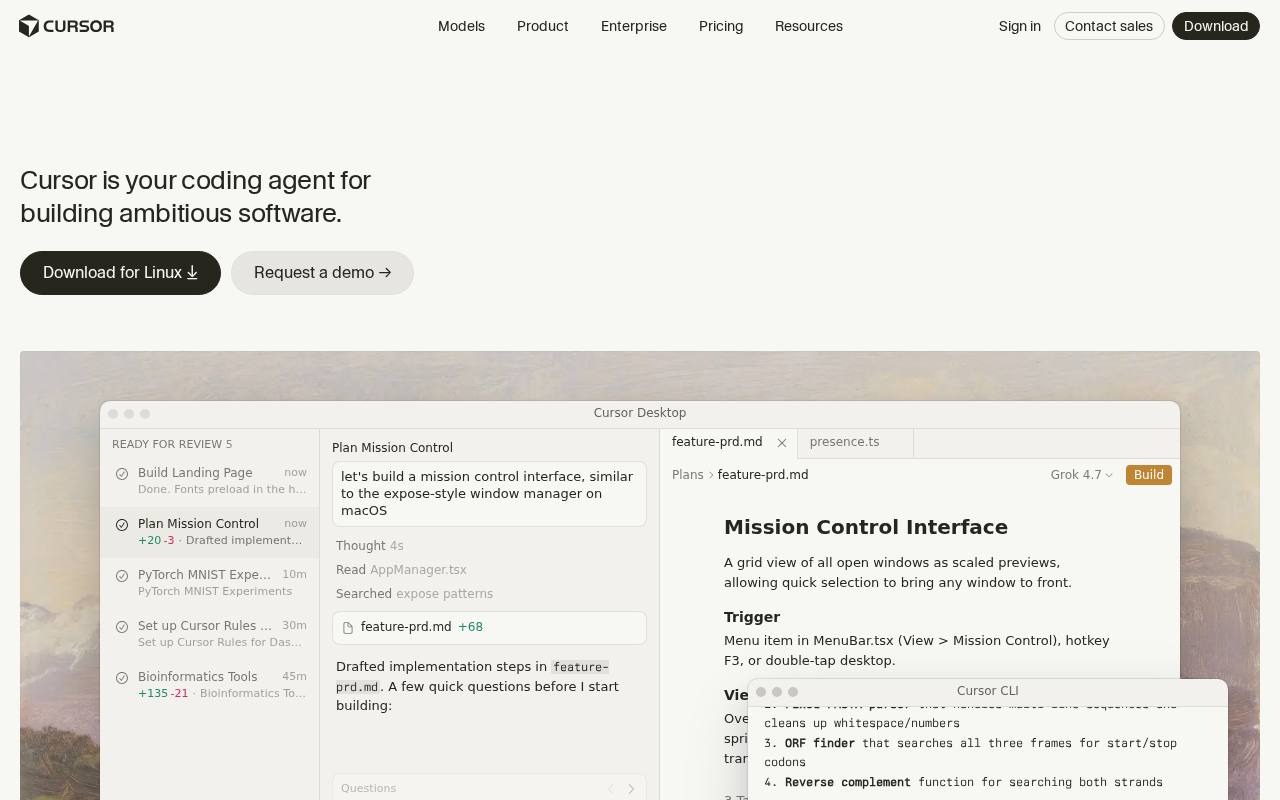
Cursor is an editor for people who already write code. It understands a whole project, can make the same change across many files and helps with debugging, but it takes time to learn.
Qodo
Qodo is closer to Tabnine but puts more weight on teams. It writes tests, explains code, works in many languages and fits into pull-request review. It is more polished than flashy.
Tabnine
Tabnine is the choice when security comes first. It offers on-premises installation and supports more than 20 languages, which matters if your CTO will not allow code to leave the building.
Pricing
| Tool | Free tier | Paid plans |
|---|---|---|
| Bolt.new | Yes | Free forever |
| Cursor | Yes | $20 to $40/mo |
| Qodo | Yes | $15+/mo |
| Tabnine | Yes | $12+/mo, custom |
Getting started
Bolt.new has no setup at all: you type a prompt and it builds. Cursor, Qodo and Tabnine need a plug-in or an install and some configuration, which pays off once you use them daily.
Bolt.new is popular with independent makers and early adopters; Cursor, Qodo and Tabnine are the ones developers and company teams tend to rely on.
The catch: the easiest tool here is the one that scales least. Bolt.new gets you to a demo fastest, but a project that grows will end up in an editor like Cursor, and teams with compliance rules will need Qodo's review tools or Tabnine's on-premises option.
Our take: Bolt.new is for getting an idea on screen tonight, Cursor is for developers doing serious work in their own codebase, and Qodo or Tabnine are for teams that need reviews, shared settings and code that stays private.